Delxium
Building Delxium: a platform, shipped in public
We designed, built, and deployed our own platform — marketing site, blog, lead capture, newsletter, and admin — in weekly shippable sprints on infrastructure we own.
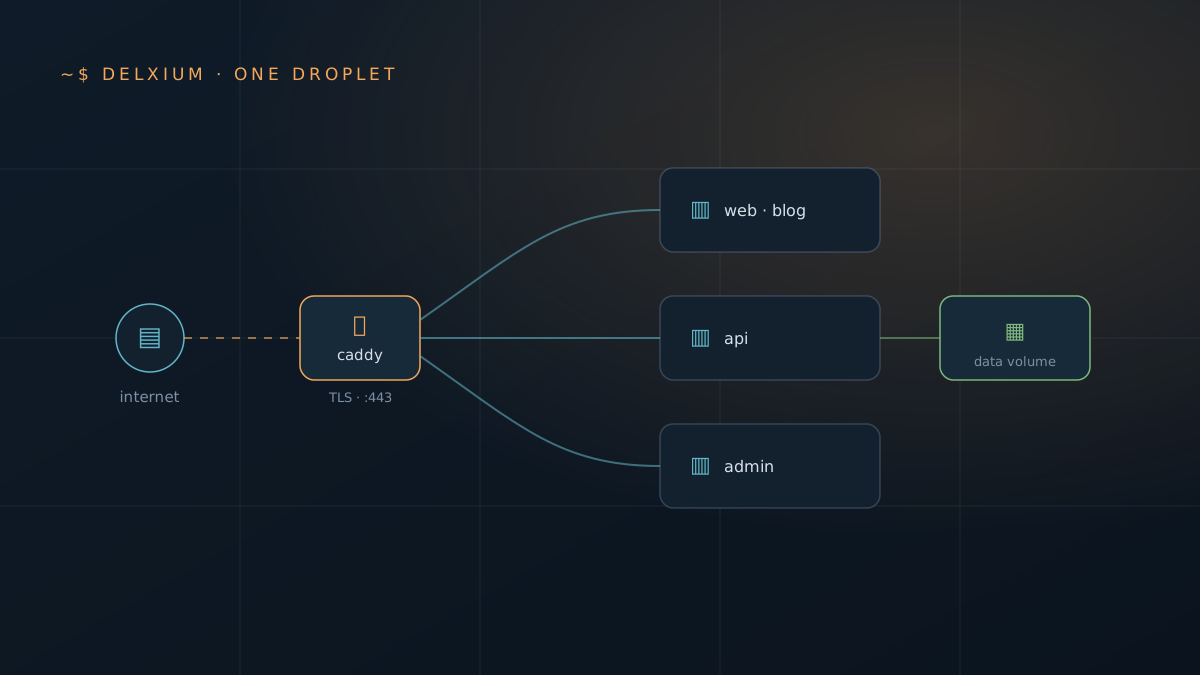
The platform you’re reading this on is itself our first case study — and the most honest one we can offer: every decision, trade-off, and deploy is something we lived.
The challenge
A new studio needs more than a logo. It needs a real surface that earns trust: somewhere to publish, to show proof of work, and to actually capture and manage inbound — without renting a stack of SaaS tools or locking into a platform we don’t control.
The goal was a single, owned system covering the public marketing site, a blog, a lead funnel, a newsletter, and an admin to run it all — built the way we’d build for a client, so the process was the portfolio.
The approach
We ran it as a real agile cycle: small, shippable slices, each one deployed before the next began.
- A walking skeleton first. Day one shipped a themed landing page with TLS and a green health check — proving the whole pipeline end to end before adding features.
- One stack, owned end to end. FastAPI serves the server-rendered public site and a JSON API; React powers the admin; SQLite keeps the data layer simple until scale demands more.
- Containerised, single host. Every service runs in a Docker container behind one TLS-terminating Caddy proxy on a DigitalOcean droplet — the pattern from our Docker pocket companion.
- Versioned, reversible releases. Every deploy is a git tag with a matching image, so rolling forward or back is one command. Day-2 operations lean on the habits in our SSH pocket companion.
The results
- From empty repo to a production platform — blog, lead capture with email alerts, a double opt-in newsletter, case studies, and an audited admin — across a handful of weekly releases.
- Reproducible deploys: tagged images + automated CI mean a release (or a rollback) is a single, boring command.
- No platform lock-in: it all runs on infrastructure we control, for the cost of one small droplet.
The same approach — ship a thin slice, deploy it, iterate — is exactly what we bring to client work. Want to see it applied to your idea? Start a project.